Self-confidence: There’s no substitute for it, and a mystery how to grow it

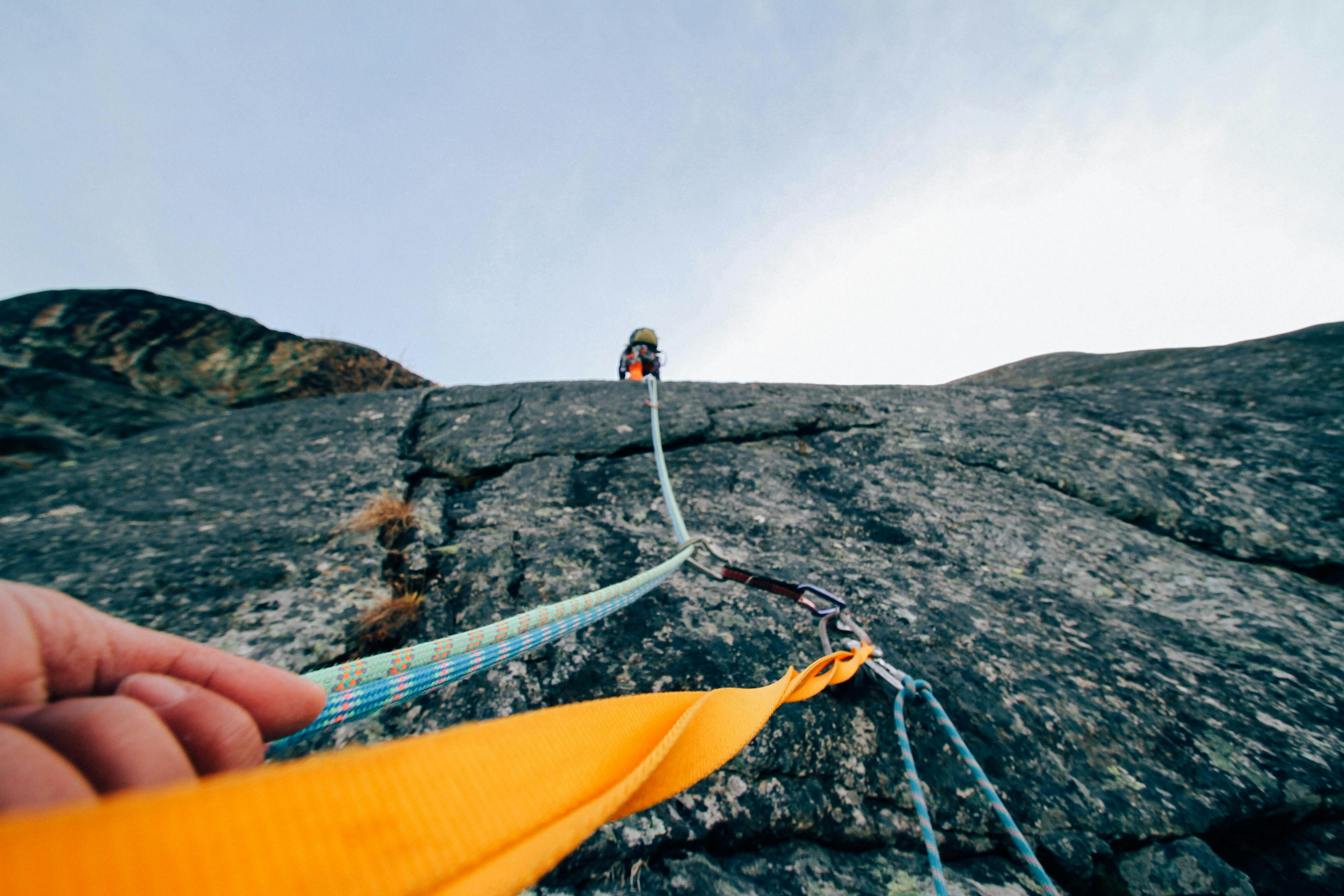
The end of every semester I teach always brings mixed emotions. It feels like a combination of exhilaration from reaching the top of a mountain I’ve been climbing with the sadness of knowing that the mountain will soon disappear. My students and I gathered months earlier for a specific set of reasons, to reach the pinnacle, almost uniformly accomplishing that. But as I reach the halfway point of another school year, I am finding it’s the other stuff, the bonus lessons, that are becoming increasingly meaningful.
I noticed a pattern of feedback from several students at the end of this semester that I am excited to hear, but I don’t yet understand. The feedback goes something like this: “Thank you for helping me build my self-confidence.”
Uh, that’s not a learning objective for my writing class. It’s not in the textbook. I don’t recall making it a priority or even mentioning it. So, how is this happening? What am I, or what are we doing that leads to this? I don’t know. Not yet anyway. But I am committed to finding out, and for some good reasons.
First, having confidence is like having a superpower.
Chahat Verma and Dr. Nirmala Singh Rathore published research on it earlier this year. In their article, “The Role Of Self-Confidence In Mental Health And Well-Being,” the professors from NIMS University found, “Research demonstrates self-confidence exists as a primary psychological element which supports mental stability together with social functioning abilities.” It’s a primary element. I believe that without it, it’s difficult to even have healthy mental or social functioning abilities.
Its absence is often visible in those struggling. Struggling with what? Whatever. Relationships? Check. Job performance? Check. Taking care of mindless daily tasks? Yes, check that box too. I can remember difficult times in my own life and how the absence of confidence both created the initial problem and was the primary barrier to overcoming it.
So, yea, it’s a big deal. I don’t know of any legitimate question regarding the value of self-confidence.
Second, if there is something going on in and around my classroom that is contributing to its growth, I should try to make more of that happen. In my speech classes, the repetitions, the practice, is a sure way to build public speaking confidence. Just like in sports, practice and game experience is how confidence is built. But in those examples, the confidence is in the ability to execute a specific task. That’s valuable, but it isn’t the confidence I want to grow.
No, I’m looking to grow a person’s confidence to try new things. The confidence to not be afraid to fail. The confidence it takes to learn from those failings and immediately try again.
I assume this is most often the type of self-confidence that would clearly support the “mental health and social functioning” the professors from NIMS University studied. It is certainly the confidence my students referred to in their feedback to me.
The best way for me to find out what is specifically causing this growth in my classes is to just ask. I will do exactly that when the new semester begins. Until then, a simple query to my preferred AI assistant produced several “methods” that generically work at building confidence and self-esteem, some of which I am already inadvertently using.
The “Small Wins Method” is an obvious one. Within the class’s seven week case project, students are assigned smaller tasks along the way that build toward the project’s final submission. The tasks create success opportunities each time. These small wins also provide for the “feedback loop” that is also vital to the method. Feedback is a prominent feature for us.
“Self-Compassion vs. Self-Esteem” is also a method I’ve been accidentally using. The high-achieving students I have likely makes this method effective. I find myself encouraging students to treat themselves with kindness when things go wrong, so their confidence doesn’t bottom out following a failure. They spend so much of their time competing with each other at this exclusive business school that the mini-setbacks and constant comparisons to each other could easily drag anyone’s self-esteem down. But every one of them is capable, talented and smart. It’s the kindness, especially to themselves, that often becomes far too easy to abandon.
Now, I realize most of my readers are not teachers. But almost all of us find ourselves on teams in one way or another. These methods, and their goals, will lead to teams that perform at a higher level if we make them a priority.
Climbing mountains is hard. If it weren’t, everyone would do it, at least for a little while. Discovering new things that make reaching the top more valuable is a great reason to keep climbing.
Michael Leppert is an author, professor and consultant in Indianapolis. He writes about culture, leadership, communication and connection at MichaelLeppert.com and on his YouTube channel.