Conversations “about nothing” really suck…or do they?


Fans of the hit 90’s TV show, Seinfeld, will vividly remember the episodes in the show’s fourth season that started with “The Pitch.” Jerry and George were making a pitch to NBC about a new sitcom that would be a “show about nothing.” It was an absurd idea, but the episode and the ones that followed that season elevated the show from merely popular, to the top of the TV comedy pecking order.
The episodes weren’t really about nothing though. They were about petty exchanges between petty people. And they were hilarious.
Earlier this month, the Journal of Personality and Social Psychology published an actual study about the real value of conversations that are about (practically) nothing. The title of the report, “Conversations About Boring Topics Are More Interesting Than We Think,” immediately made me proclaim: That is the secret behind Seinfeld! Then I started writing this column, before I read the first word of the report.
Elizabeth Trinh, MA, a doctoral student at the University of Michigan and lead author of the report, mentions Seinfeld’s conversations “about nothing” on the very first page!
However, “boring” is not the same as “nothing.” Some of the conversation topics that were used in the nine experiments with 1,800 participants, were things like World Wars I and II, nonfiction books, the stock market, cats, and vegan diets. Uh, I guess I’m boring. Those topics sound fantastic to me.
The key findings in the study were that conversations about these boring things were more enjoyable than people expected them to be. Which also made me wonder: Maybe people are too pessimistic about the wonder of conversations in the first place. I’m going to look into this possibility myself.
“We tend to assume that if a topic sounds dull, the conversation will be dull too,” said Trinh, in a press release published by the American Psychological Association. “But that’s not what people actually experience…What really drives enjoyment is engagement,” she said. “Feeling heard, responding to each other, and discovering unexpected details about someone’s life can make even a mundane topic meaningful.”
This is the week in my business writing classes that I devote to the science, the tools, and the value of conversations. Learning about these things and preparing to teach my students what I have learned during the last two years studying this has been the opposite of boring. Studies keep encouraging me to keep digging, keep learning and keep teaching it.
People have a physiological need to connect with each other. I write and speak about the study that made that finding often. I can’t imagine technology displacing that need. No matter how AI advances, humans will continue to need conversations in much the same way humans need exercise.
Back in Seinfeld world, the breakout fourth season that featured the fictional story arc about the pitch to NBC slowly became inaccurate lore about how the show itself was originally pitched. A show about nothing certainly sounds like something Seinfeld and Larry David would have dreamt up together, but that’s not what really happened.
The two creators actually pitched a show idea about how standup comedians get their material. As reported in Slashfilm, David goes on to add that it was “about the modern city-dweller’s pettiest impulses.” Yes, this is really the way I always viewed the show myself. The episodes seemed to be slices of seemingly unimportant lives, featuring the pettiest of conversations between those average people, captured on film.
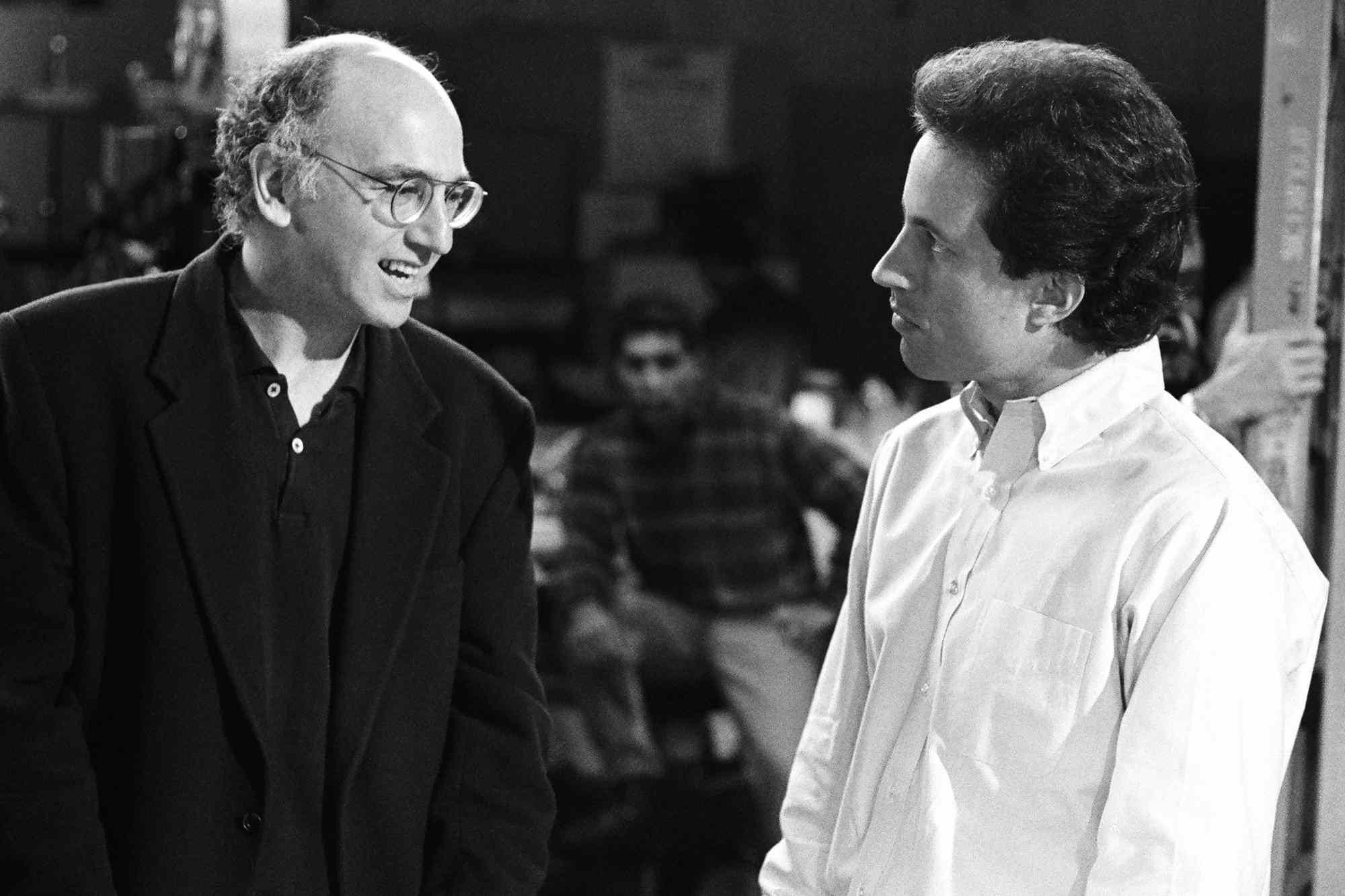
It was filmed in Los Angeles, using a manufactured backdrop of New York’s Upper West Side neighborhood where the fictional characters lived. But the setting could have been anywhere, just like the episodes could have been about anything.
I remember how hard it was to explain why the show was so funny to people who had not been watching it. It was remarkably like trying to convey how great a conversation was to people who weren’t involved. Seinfeld is a classic, “you had to be there” kind of experience.
Finding the fun in any conversation isn’t as difficult as many people think. All one has to do is be on the lookout for it. It’s a small part of what I am teaching my students this week. And don’t worry, I didn’t just make it all up. Dr. Alison Wood Brooks writes extensively about “levity” in her book, TALK; The Science of Conversation and The Art of Being Ourselves. It’s a book everyone should read.
I imagine a future where seeking out daily conversations, and finding the fun in them, will be as trendy as Tai Chi or GLP shots. There was a time when just living our lives was filled with plenty of physical activity and human, face-to-face exchanges. And this latest research continues to show that we should be protecting, preserving, and promoting the value of connecting with each other like the gold it truly is.
Michael Leppert is an author, professor and consultant in Indianapolis. He writes about culture, leadership, communication and connection at MichaelLeppert.com and on his YouTube channel.
Perhaps in our fast-paced, transactional world, conversation is viewed more as a means to an end rather than the end itself. Great to hear educators are trying to change this. :)